
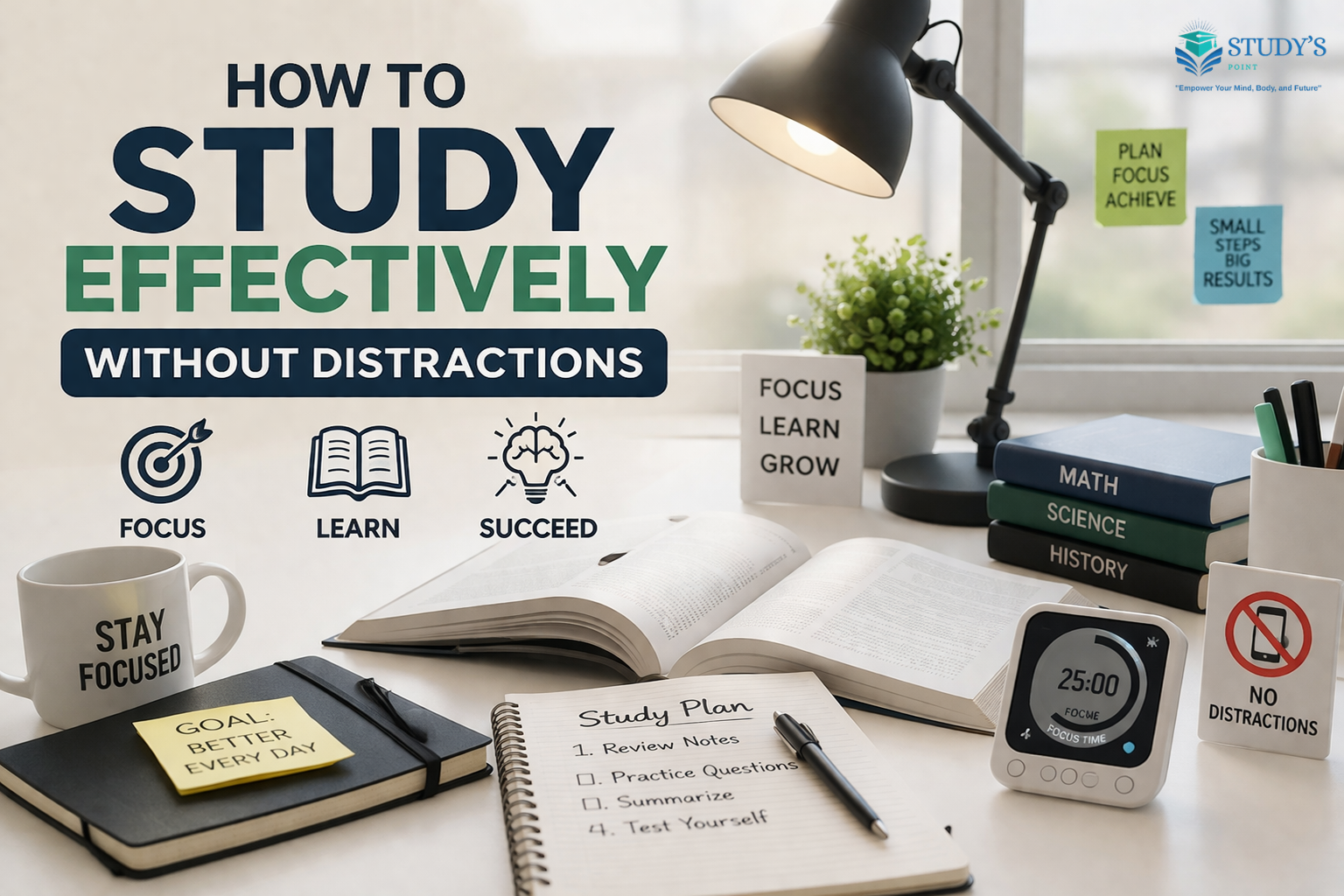
Introduction
Honestly, if you ask most students, they don’t really struggle with studying itself. The real issue usually starts when it comes to staying focused for a longer time.
You sit down, open your book, and in the beginning everything seems fine. But after a few minutes, your attention slowly starts slipping. It doesn’t happen suddenly every time — sometimes it just fades without you even noticing.
Sometimes it’s your phone. Sometimes it’s noise around you. And sometimes, there’s no clear reason at all — your mind just starts thinking about random things.
If you think about it, this probably happens more often than you realize. You might spend hours sitting with your books, but at the end of the day, it doesn’t feel like you actually learned much.
Then there are those days when you study for less time but understand things much better. That difference is important. It’s not really about how long you study. It’s more about how focused you are during that time.
I’ve seen this happen with a lot of students. The good part is, this can actually be improved with a few simple changes.
Why Distractions Are a Bigger Problem Than You Think
Most students don’t really notice how often their focus breaks during study time. It feels normal — checking your phone, looking around, or thinking about something else for a moment. But if you look closely, it keeps happening again and again.
Every time your focus breaks, your brain has to reset. For example, if you’re studying something and suddenly check your phone, when you come back, you’re not at the same level of concentration.
It takes a bit of time to get back into that flow. It may sound small, but it makes a difference over time. If this keeps repeating, your study session becomes slower and less effective.
Even if you sit for a long time, the actual learning is not that strong. This is something many students deal with, whether they realize it or not.
Fix Your Study Environment First
Before trying anything complicated, it’s better to start with your surroundings. A messy or noisy place can easily distract you. You might not notice it immediately, but it affects your focus over time.
Try to have a fixed place where you study regularly. It does not need to be perfect — even a simple desk or a quiet corner is enough.
Also, studying on your bed usually does not help. It feels comfortable, but it often makes you feel less focused or even sleepy.
Keep your study area simple. Only keep the things you actually need in front of you. Too many items around you can break your attention without you realizing it.
Set Clear Goals Before You Start
One common issue is starting study without a clear plan. When you don’t know exactly what you’re going to do, your mind keeps shifting from one thing to another.
This is where distractions slowly begin. Instead, try to decide your tasks before you start. For example:
- Finish one topic
- Solve a certain number of questions
- Revise for a fixed amount of time
You don’t have to do everything at once. Just pick a few tasks and complete them properly. This gives your study session direction and helps you stay focused.
Study in Short Sessions
Not everyone can focus for long hours, and that’s completely normal. Instead of forcing yourself, try studying in shorter sessions. For example, study for 25 minutes, then take a 5-minute break. Repeat this a few times.
This approach feels easier to follow. You’re not trying to sit for hours — just focusing for a short period at a time.
Over time, your focus improves naturally. It may not happen immediately, but it gets better with practice.
Keep Your Phone Away
This is something most students already know, but still struggle to follow. Your phone is one of the biggest distractions. Even if you don’t use it much, just having it nearby can affect your concentration.
One notification is enough to break your focus. If possible, keep your phone in another room while studying.
If that is not practical, at least keep it out of your reach or turn off notifications. It might feel uncomfortable in the beginning, but after a few days, it becomes normal.
Use Active Study Methods
Just reading your notes again and again is not always effective. It might feel like you are studying, but you may not remember much later. Instead, try to do something with what you study.
For example:
- Write notes in your own words
- Ask yourself simple questions
- Try explaining the topic out loud
You don’t need to do all of these every time. Even doing one of these can help you understand better. Simple diagrams or rough notes can also make things clearer, especially for difficult topics.
Keep Your Study Plan Simple
Time management is important, but overcomplicating it can create more stress.
Some students make very strict schedules and then feel frustrated when they cannot follow them perfectly.
Instead, keep your plan simple and realistic. Decide how much time you can actually study and try to stick to it.
You do not need a perfect routine. Just try to stay consistent. That is what really matters in the long run.
Avoid Multitasking
It might feel like you can study while checking messages or doing something else, but it usually does not work well.
When you try to do multiple things at once, your attention gets divided. As a result, your study quality drops. It is better to focus on one task at a time. Finish it properly, then move on to the next one.
Take Care of Your Energy
Sometimes the problem is not distractions — it is low energy. If you are tired or did not sleep properly, your focus will naturally be weak. No method can fully fix that.
Make sure you get enough rest, eat properly, and take short breaks when needed. Even a short walk can help clear your mind. A fresh mind always works better.
Stay Motivated in a Realistic Way
Not every day will feel productive, and that is completely normal. There will be days when you do not feel like studying at all.
On those days, start with something small instead of skipping everything. Once you begin, it usually gets easier.
You can also give yourself small rewards after completing tasks. It helps you stay motivated without putting too much pressure on yourself.
Final Thoughts
Learning how to study effectively without distractions takes time. It is not something that changes overnight. You do not need to be perfect. You just need to improve little by little.
Some days will go well, and some will not. That is part of the process. Start with small changes — fix your study space, set clear goals, and reduce distractions step by step.
Over time, these small changes turn into habits. And once that happens, studying becomes easier and more productive without forcing yourself too much.