
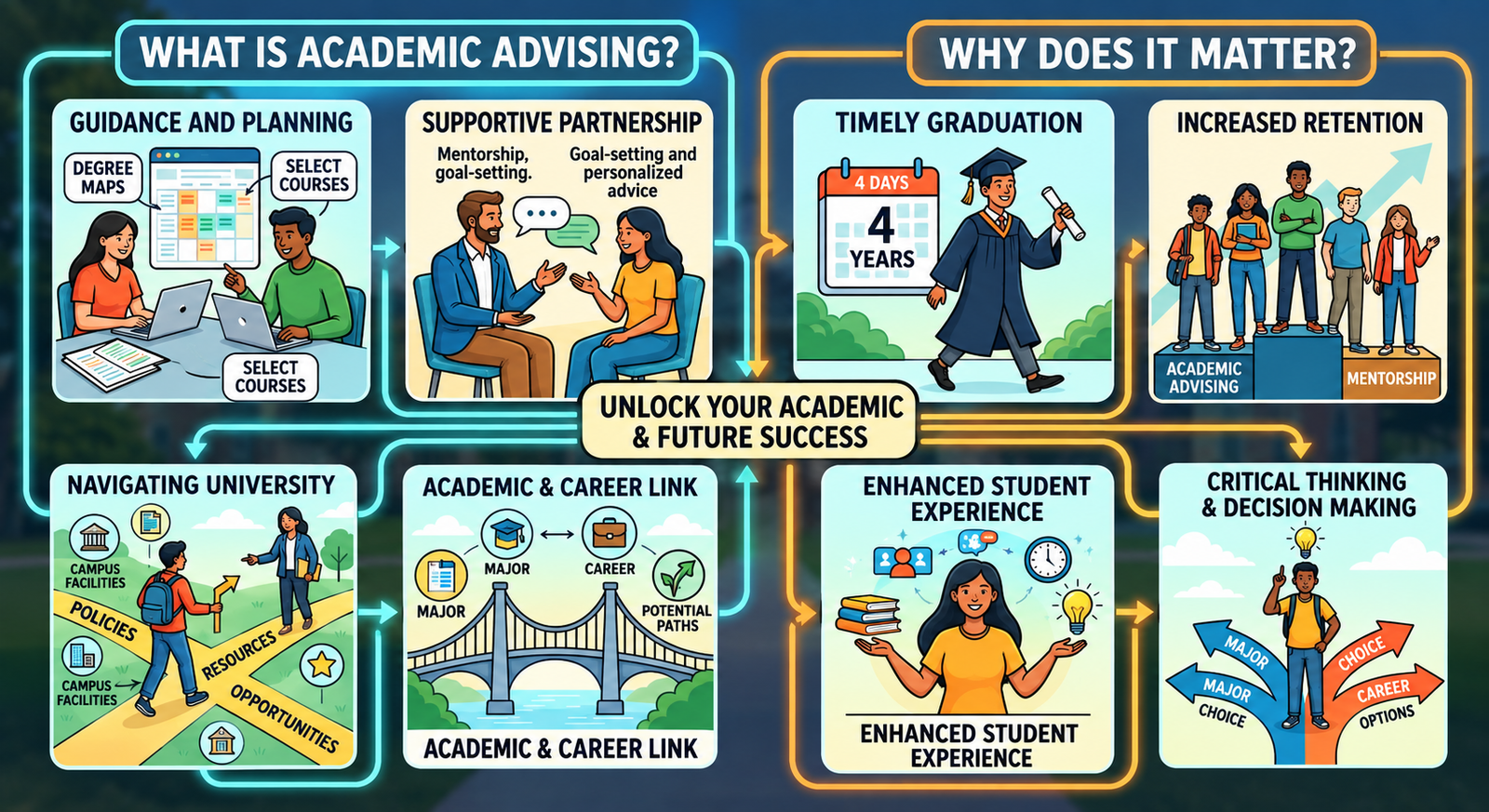
Starting college can bring many new responsibilities. Students have to choose classes, understand degree requirements, manage deadlines, and make decisions about their academic goals. Study’s Point provides useful study material and practical information that can help students understand different parts of college life. One important part of that experience is academic advising. Understanding what an academic advisor does and when to ask for help can make it easier for students to plan their education and stay on track.
Academic advising is not simply about choosing classes. It can involve understanding degree requirements, discussing academic goals, planning future semesters, exploring educational options, and finding appropriate campus resources. The exact services vary between colleges and programs, but the overall purpose is to help students make informed academic decisions.
What Is Academic Advising?
Academic advising is a support service offered by many colleges and universities. Students can meet with an academic advisor to discuss their educational plans and questions about their academic progress.
An advisor may help a student understand:
- Degree requirements
- Course options
- Academic policies
- Graduation requirements
- Registration procedures
- Major and minor requirements
- Academic resources
- Possible changes to an academic plan
An advisor is not usually responsible for making every decision for the student. Instead, advisors can provide information and guidance so students can make decisions based on their own goals and circumstances.
What Does an Academic Advisor Do?
The responsibilities of an advisor can vary depending on the college, department, and student’s program.
A typical academic advisor may help students understand how individual courses fit into their overall degree plan.
For example, a student may know that they need to complete several courses before graduation but may not understand which courses should be taken first.
An advisor can help the student review the requirements and identify possible options.
Advisors may also help students understand registration rules, prerequisites, course loads, academic policies, and other college procedures.
Why Is Academic Advising Important?
College students have many decisions to make. Some decisions may affect their academic progress for several semesters.
Choosing a course without checking prerequisites, misunderstanding a degree requirement, or delaying an important class can sometimes create problems later.
This is one reason academic planning matters.
Regular communication with an advisor can help students understand their academic requirements and identify questions before they become larger problems.
However, students should still take responsibility for reviewing their degree requirements and official college information.
Understanding Degree Requirements
One of the most useful reasons to meet with an advisor is to understand your degree requirements.
A degree may include several categories of courses, such as:
- General education requirements
- Major requirements
- Elective courses
- Prerequisite courses
- Upper-level courses
- Minor requirements, if applicable
Students may sometimes assume that completing a certain number of credits automatically means they are ready to graduate.
That is not always the case.
A student may need particular courses rather than simply a certain number of credits.
An advisor can help explain how the requirements fit together, while students should also regularly check their official degree audit or academic records.
Choosing Courses
Course selection can be confusing, particularly during the first few semesters.
Students may have many options but limited space in their schedules.
An advisor can help students understand how different courses may fit into their degree plan.
For example, a student might be deciding between two elective courses. The advisor can explain how each course may apply to the student’s program, while the student can consider personal interests, workload, career goals, and scheduling needs.
The final decision generally belongs to the student.
Planning Your Academic Schedule
Good scheduling involves more than filling every available time slot.
Students may need to consider:
- Course difficulty
- Work responsibilities
- Transportation
- Family responsibilities
- Study time
- Prerequisites
- Course availability
- Personal academic goals
A student taking several demanding courses at the same time may need to think carefully about how much study time will be required.
An advisor can help students understand their options and college policies, but students should honestly consider their own circumstances when creating a schedule.
Academic Advising for First-Year Students
First-year students often have many questions.
They may not know how college registration works, how many credits they should take, or which courses are required.
Meeting with an advisor can help new students become familiar with the academic system.
Questions a first-year student might ask include:
- What courses do I need for my degree?
- Which classes should I take first?
- Do I need to complete prerequisites?
- How can I track my academic progress?
- What happens if I drop a class?
- How do I choose electives?
- When should I start planning future semesters?
Asking questions early can make the transition into college easier.
Academic Advising and Major Selection
Some students enter college knowing exactly what they want to study. Others are still exploring their interests.
Academic advising can be useful in both situations.
If you already have a major, an advisor may help you understand the requirements and possible course sequence.
If you are undecided, an advisor may explain available programs and direct you toward appropriate campus resources.
However, students should not feel that they have to choose a major simply because someone else recommends it. Academic and career decisions involve personal interests, abilities, goals, financial considerations, and other factors.
Changing Your Major
College students sometimes discover that their original major is not the right fit for them.
Changing a major may affect:
- Required courses
- Graduation timeline
- Credit requirements
- Financial costs
- Course availability
- Academic planning
Before making a change, students may want to speak with an advisor and review the official requirements for the new program.
This can help them understand the potential academic consequences before making a decision.
Tracking Academic Progress
Students should not wait until their final semester to check whether they are on track for graduation.
Regularly reviewing your academic progress can help you identify missing requirements early.
Many colleges provide online degree audit systems where students can see completed requirements and remaining courses.
Students should learn how their institution’s system works and review it periodically.
An advisor can help explain information that is unclear.
When Should You Meet With an Advisor?
The appropriate advising schedule varies by college.
Some schools require advising appointments before registration, while others may recommend regular meetings.
Students may want to contact an advisor when:
- Starting a new program
- Choosing courses
- Considering a major change
- Having difficulty in a course
- Considering dropping or withdrawing from a class
- Planning for graduation
- Exploring study-abroad opportunities
- Considering a minor
- Returning after an academic break
Students should also check their college’s official advising policies because requirements differ between institutions.
Prepare Before an Advising Appointment
You can get more from an advising appointment if you prepare beforehand.
Before the meeting, review your current schedule and academic information.
Write down your questions.
For example:
Question 1: Which courses do I need to complete next semester?
Question 2: Are there prerequisites I should complete first?
Question 3: Am I currently on track for my expected graduation date?
Question 4: What options do I have if a required course is full?
Question 5: Are there electives that fit my interests?
Having specific questions can make the conversation more productive.
Take Responsibility for Your Academic Decisions
An advisor can provide guidance, but students should remain actively involved in their education.
Do not assume that an advisor will automatically notice every problem with your schedule or degree progress.
Read your college catalog, degree requirements, registration information, and academic policies.
Check deadlines.
Review your course schedule.
Keep copies of important academic documents.
This is part of developing student academic planning skills.
What If You Disagree With an Advisor?
Students may sometimes receive advice that does not match their personal goals or understanding.
If you are uncertain, ask questions.
You can say:
“Could you explain why this course is recommended?”
“How would this choice affect my graduation requirements?”
“Are there other options?”
“Can I review the official policy?”
Important academic decisions should be based on accurate and current information.
When necessary, students can consult the official college department, registrar, catalog, or another appropriate campus office.
Academic Advising and Graduation Planning
As students approach graduation, advising becomes especially important.
Students should make sure they understand:
- Remaining degree requirements
- Required credits
- Major requirements
- Graduation application deadlines
- Final semester requirements
- Any outstanding academic obligations
Do not wait until the last few weeks of your final semester to discover that a required course is missing.
Starting graduation planning early gives you more time to identify potential issues.
Advising Can Connect Students With Other Resources
Academic advisors do not necessarily handle every student problem themselves.
They may help students identify other campus resources.
Depending on the situation, students may be directed toward:
- Tutoring centers
- Writing centers
- Career services
- Financial aid offices
- Disability support services
- Counseling services
- International student offices
- Department faculty
- Registrar offices
Knowing where to find help is an important part of navigating college successfully.
Academic Advising Is Different From Career Counseling
Academic advising and career counseling can overlap, but they are not exactly the same.
Academic advising generally focuses on educational planning, course requirements, academic progress, and degree-related decisions.
Career counseling generally focuses more on career exploration, employment preparation, resumes, interviews, internships, and career goals.
A student may benefit from both services.
For example, an academic advisor can help you understand which courses are required for your degree, while a career counselor may help you explore possible career paths connected to your interests.
Make Advising a Regular Part of College Life
Academic advising should not only be something you think about when there is a problem.
Even students who are doing well can benefit from periodically reviewing their academic plans.
Your goals may change.
You may discover a new subject that interests you.
You may decide to add a minor, explore another program, or consider graduate school.
Regular college academic support can help you stay aware of your options.
Common Mistakes Students Make
Several mistakes can make academic planning more difficult.
Waiting Until There Is a Problem
Students sometimes contact an advisor only after missing a requirement or deadline.
Not Asking Questions
If you do not understand something, ask for clarification.
Assuming Someone Else Is Responsible
Students should not assume that an advisor, professor, or college system will automatically manage every academic decision for them.
Ignoring Official Information
Advice from friends can be useful for personal experiences, but degree requirements and college policies should be confirmed through official sources.
Failing to Track Progress
Review your academic record regularly rather than assuming everything is correct.
Final Thoughts
Academic advising can be an important part of the college experience. It can help students understand degree requirements, plan courses, review academic progress, explore options, and connect with appropriate campus resources.
At the same time, students should remain active participants in their education. An advisor can provide information and guidance, but students ultimately need to understand their requirements, deadlines, choices, and academic goals.
Whether you are a first-year student trying to understand registration or a senior preparing for graduation, asking questions and reviewing your academic plan can help you make more informed decisions.
Good academic planning, regular communication, and careful attention to official college information can make the college journey more organized and easier to navigate.
Disclaimer
The information provided in this article is for general educational and informational purposes only. It is not professional academic, financial, insurance, legal, medical, or career advice. College policies, degree requirements, deadlines, and advising procedures vary between institutions and can change over time.
Students should verify important academic information with their college, university, academic department, registrar, or another appropriate official source before making important decisions.
Terms and Conditions
By using Study’s Point, visitors agree to use the website for lawful and personal informational purposes. Content published on the website is intended for general information and may be updated, changed, or removed without prior notice.
Study’s Point does not guarantee that every article will always be complete, current, or suitable for every individual situation. Website content should not be treated as a replacement for official college policies or professional advice.
Visitors must not use the website for unlawful purposes, attempt to interfere with website operations, or reproduce substantial amounts of website content without appropriate permission.
Privacy Notice
Study’s Point may use cookies, analytics tools, and advertising technologies to understand website traffic, improve website performance, and support website operations.
Third-party advertising and analytics providers may have their own privacy policies and terms. Visitors should review those policies when applicable.
Study’s Point does not require readers to provide unnecessary personal information when accessing educational content.
Contact
For questions, suggestions, corrections, or concerns regarding content published on Study’s Point, visitors can contact the website through its official contact channel.
Email: support@studyspoint.com
About Study’s Point
Study’s Point is an educational and informational website providing useful study material and practical information for students. The website focuses on clear and accessible content covering academic topics, study techniques, college preparation, and other useful educational subjects.